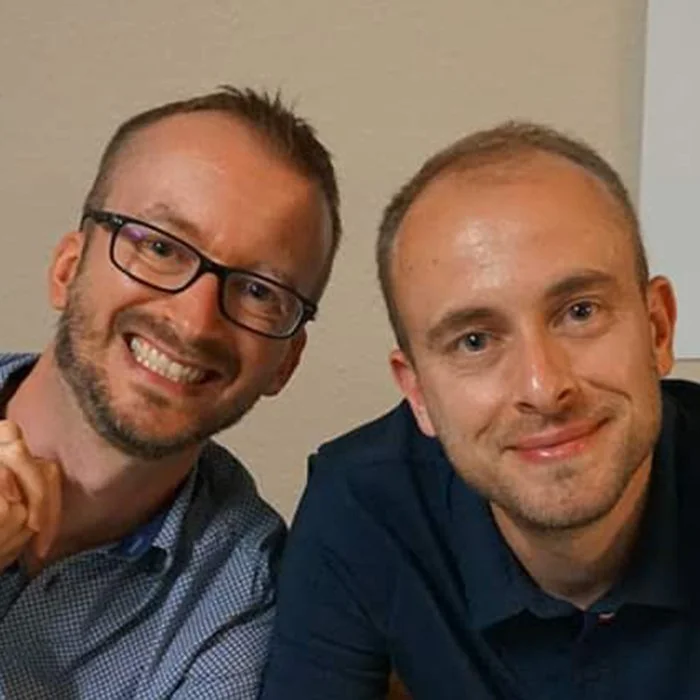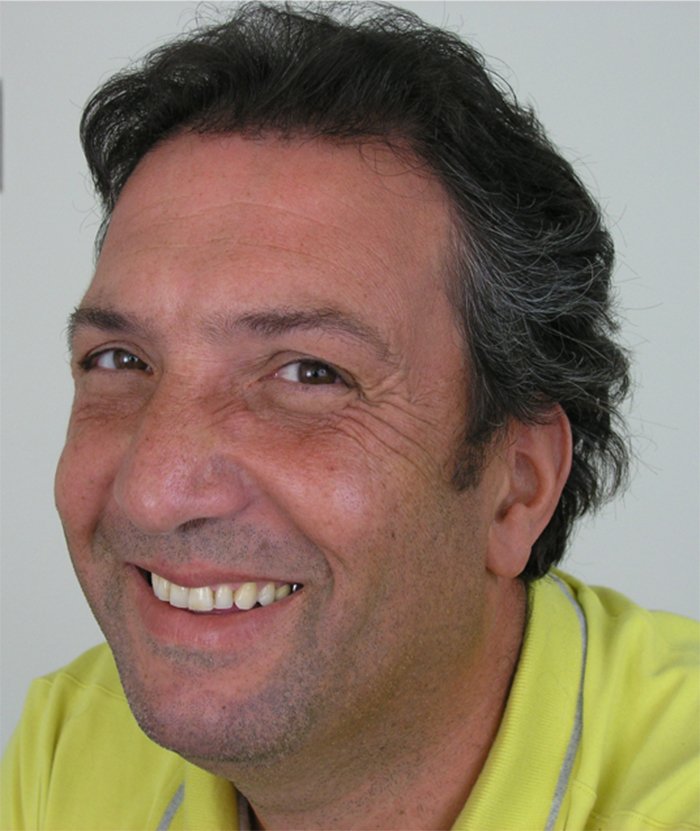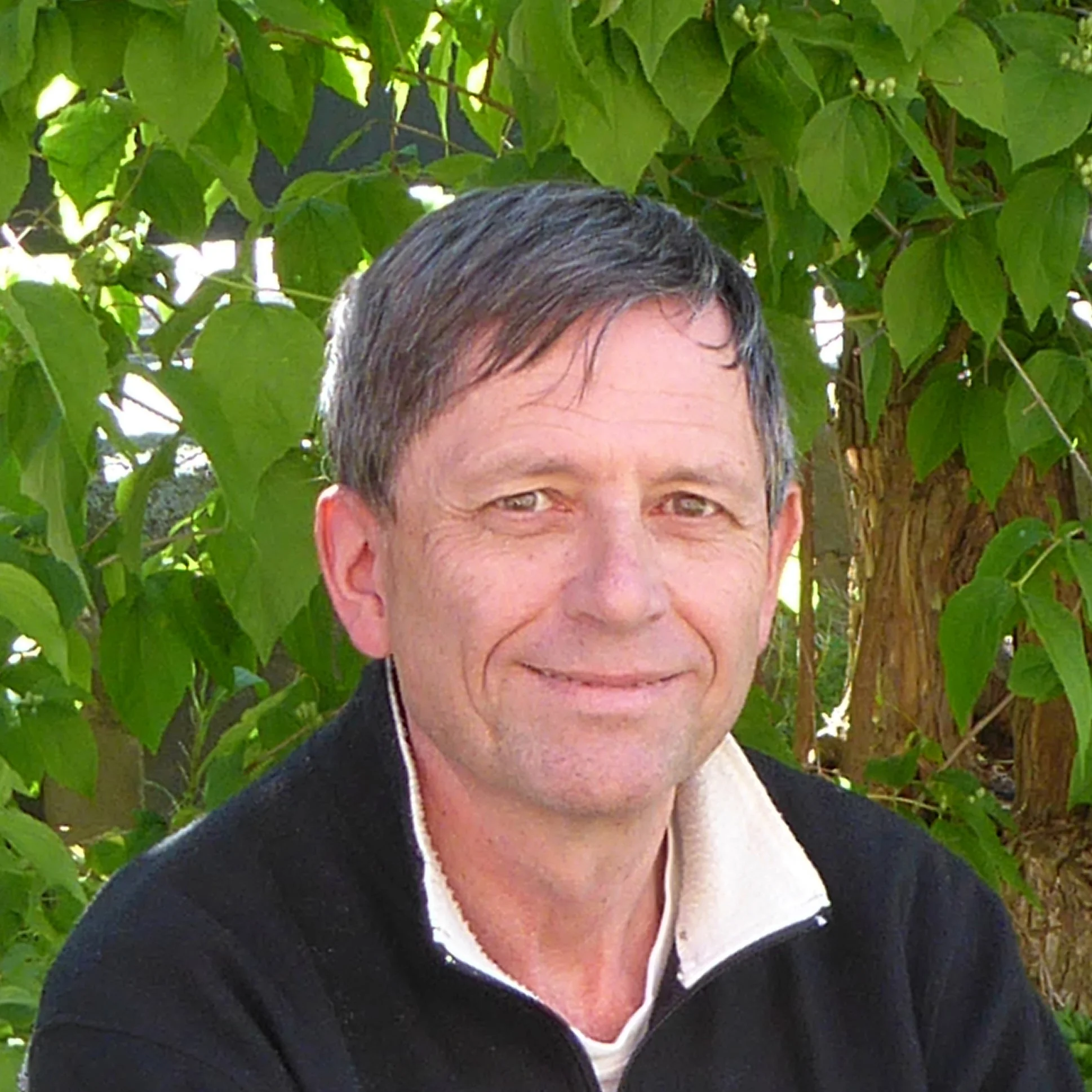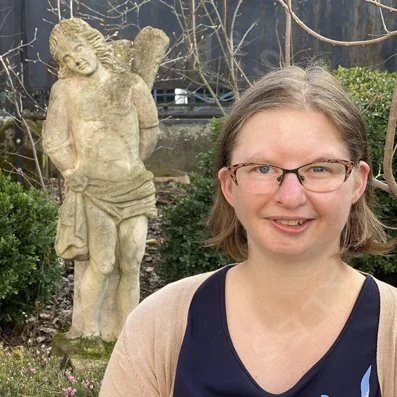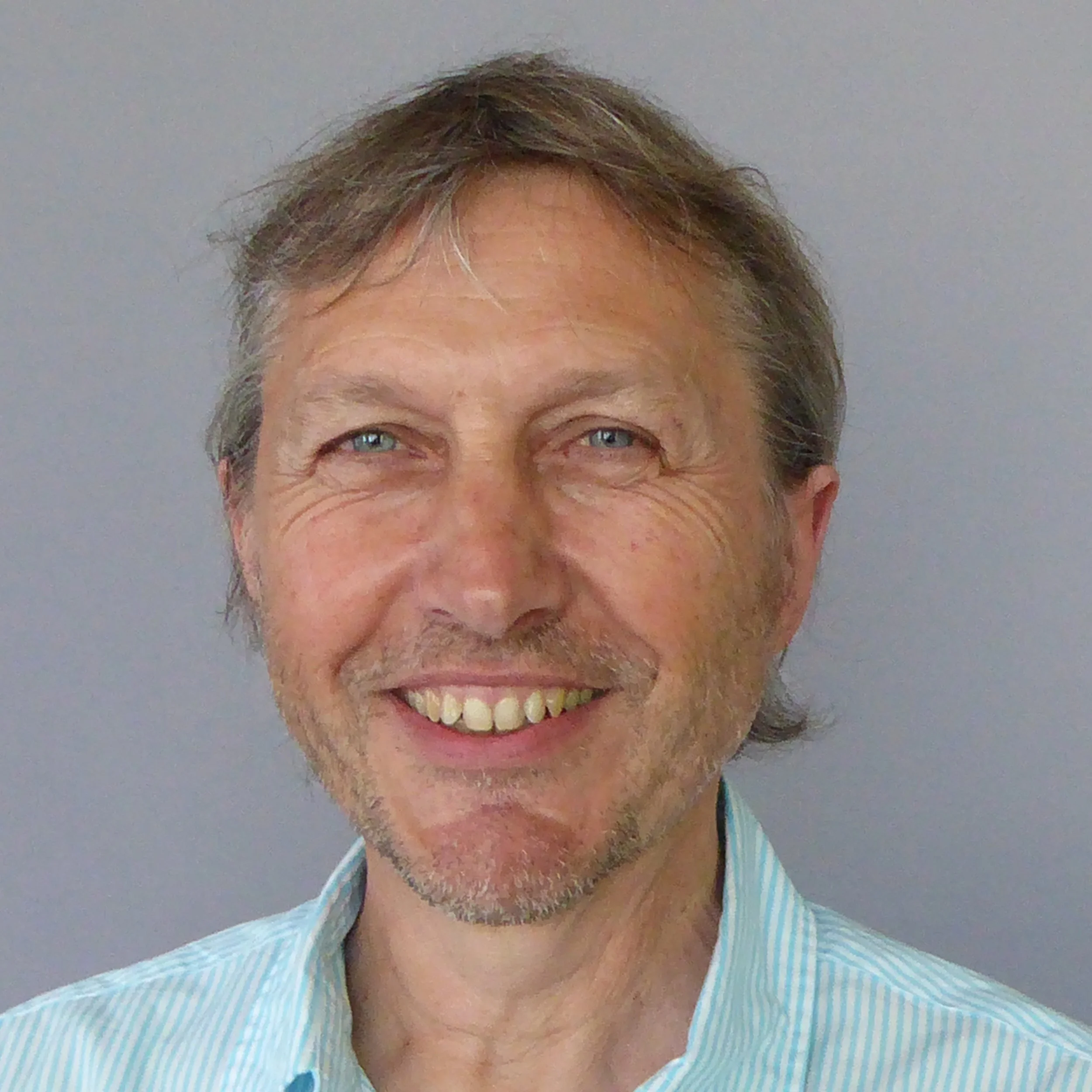
Didier


Left auricular epithesis, clipped onto a gold bar since 1987

“I was born with a total absence of an inner and outer ear on the left-hand side.

From 1971 to the mid-1980s; I underwent several attempts to reconstruct the inner and outer ear. At the end of the day, it was a total failure. After all those operations, I was left with a disappointing result visually, with scars and puffy skin - not exactly the height of beauty.

I met Anne-Marie Riedinger for the first time in 1987, following a proposal by Dr Hamann, an ENT surgeon at Necker Hospital in Paris, to carry out a new method of reconstructing the outer ear by using a prosthesis. I made up my mind to go ahead with it. Two operations were necessary to fit the implants and abutments and then the prosthesis could be fabricated.

As soon as I received my prosthesis, my life changed completely. I looked at myself in the mirror and saw a completely different person. I had been waiting for this person for a long time, during all those years spent in hospital, in the hope of becoming like everyone else and having two ears. I no longer have to hide my disability, I no longer dread people staring at me and making comments, or feel like I’m not normal.

Anne-Marie Riedinger is a craftswoman and an artist. Each prosthesis is unique in its precision. Just like a painter, she adds her personal touch, her signature. She doesn’t just replace a damaged, mutilated or inexistent part of the body, she brings something extra into the lives of her patients. Through her work she reassures her patients allowing them to be perceived as just an ordinary someone not a mutilated person damaged by life. If I hadn’t met Anne-Marie Riedinger, my life would certainly have taken a different turn. I owe her a lot and can’t thank her enough.”
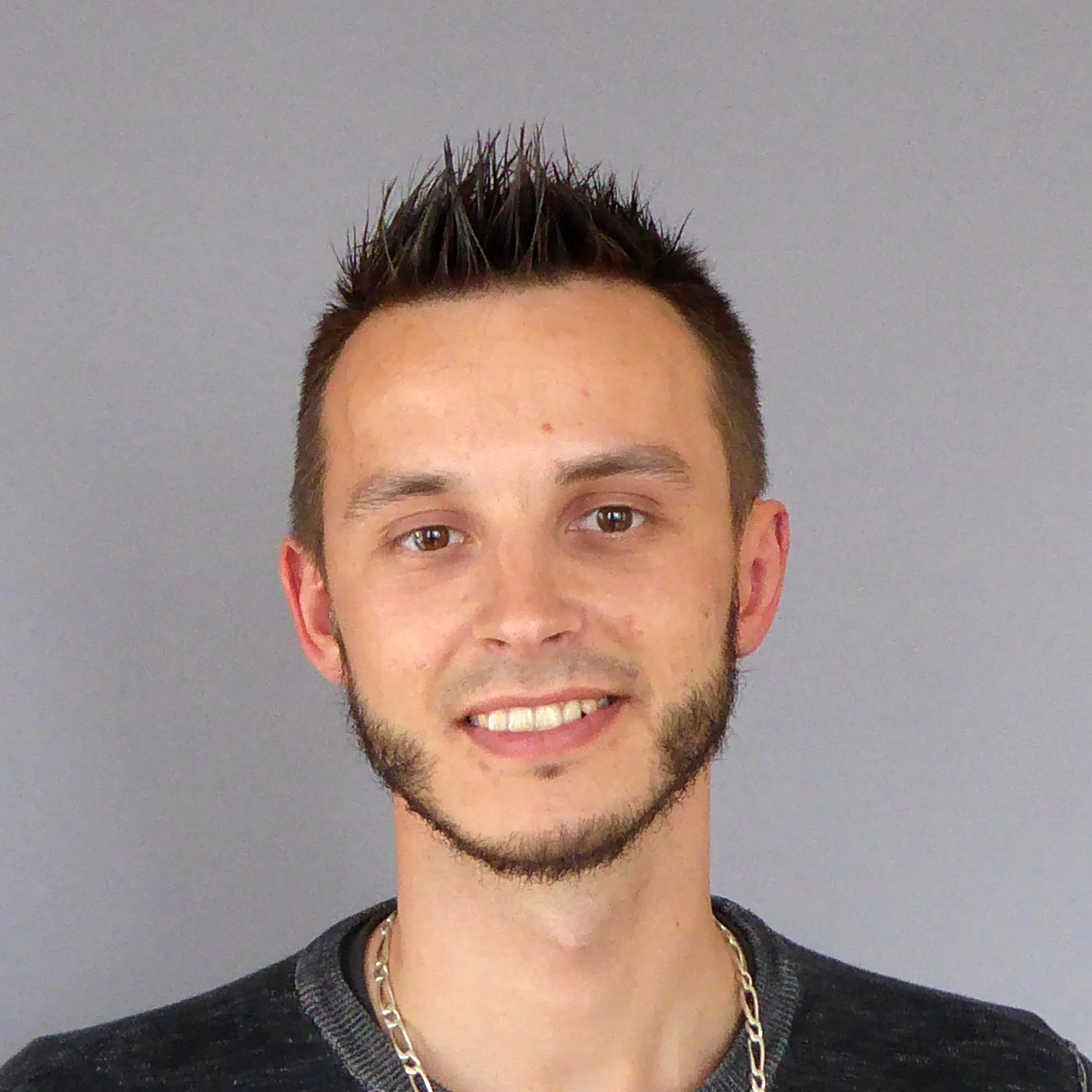


Julien

Julien, December 2017.

“Because I was afraid of being taunted, I have always worn my hair long to cover up my difference (agenesia). But that didn’t prevent me from having complexes (lack of self-confidence, embarrassment, timidity etc.).

At the age of 20, I finally decided to follow my surgeon’s advice and to have an operation and have a prosthesis fitted.

Everything changed for me when I got my prosthesis. I had my hair cut very, very short. My self-confidence grew and I accepted my difference to such a degree that after unfortunately losing my prosthesis, I went for 16 months without wearing anything or trying to camouflage it with a dressing and I didn’t feel different in any way.

I can even joke about it and if I can’t hear something properly, I don’t hesitate to cock my prosthesis in the speaker’s direction!

Obviously people still stare at me if I’m not wearing my prosthesis, but it does not bother me anymore.”


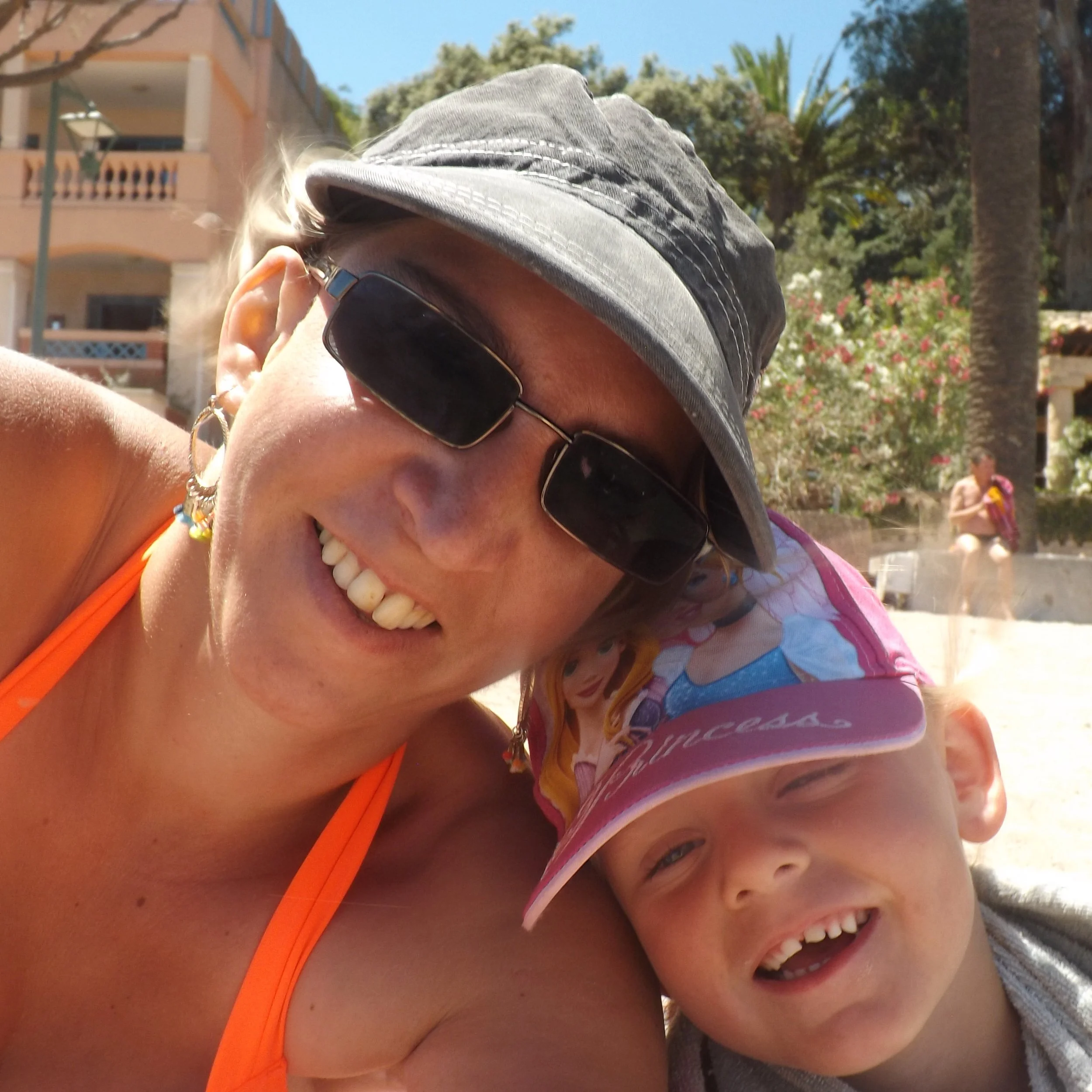
Bilateral auricular prostheses, attached using magnets and BAHA on the left

“I was born with Treacher Collins syndrome (a genetic disorder) which for me translated into physical deformities: a cleft palate, no ears and no visible auditory canal, and my lower jaw was not fully developed.

At 6 months old, I had to wear a headband with hearing aids because I was hearing-impaired. During my childhood, I felt rejected by my school friends and part of my family. My father died when I was 8 years old and from then on my mother couldn’t cope with my disorder. I went to an education centre for hearing-impaired children from the age of 8 to 16 where I learned lip reading and sign language so that I could communicate.

In 2010 (when I was 25), my jaw was successfully reconstructed with a chin graft which helped me breathe much better as well.

It was only in 2015 that I was informed that I could be transformed into what I would call a normal person physically, with the aid of auricular prostheses. The implants were fitted in Besançon at the same time as the implant for the bone-anchored hearing aid (BAHA) in July by Prof Tavernier’s team, and then 4 months and 3 consultations later with Anne-Marie Riedinger in 2015, I finally had ears. Since then, I am no longer afraid of people looking at me, I wear earrings and I feel far more feminine. At the same time, the BAHA has significantly improved my hearing. I am the mother of 3 children who have been spared this disorder, I am married and happy with everything that has been accomplished to make my life better. For that I would like to thank my surgeons and especially my anaplastologist with all my heart.”


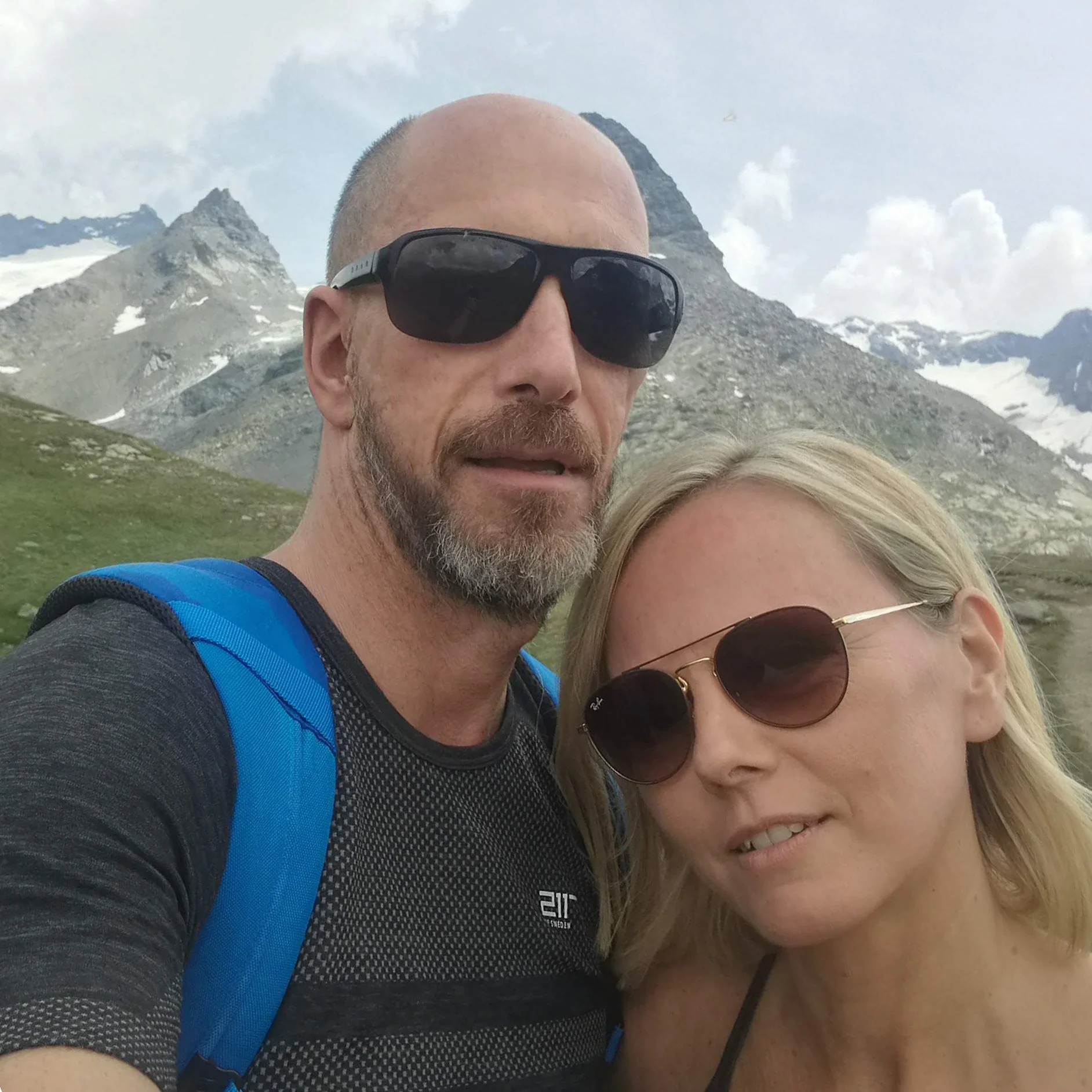
Emmanuel and his girlfriend hiking, 2018.


Right auricular prosthesis, clipped onto a gold bar

“I live in Savoie and was born with a deformity on my right ear.

As a child, I wore my hair long - but it is really hard to gain acceptance when you’re different from other people. Later on, I had the impression that people were not really interested in me, but only in my little ear. I gradually started to go bald and I wanted to do something.

My ENT specialist talked to me about prosthetic reconstruction and I bit the bullet in 1998 at the age of 28. My first prosthesis helped improve my life and my relationship with others. However, people’s gaze would nonetheless drift in the direction of my ear.

The first prosthesis, fabricated in the region where I live, was made of a hard material and I could feel it all the time. It was really uncomfortable and painful. In the end I was ill-at-ease all the time, but that was before…

I had the opportunity of meeting Anne Marie Riedinger in 2009 and I experienced it like a second rebirth. She completely adapted the prosthesis in relation to the existing morphology using very supple, comfortable materials which meant I could move my head without feeling any pressure or pain. The result is stunning. Firstly from an aesthetic point of view, as even my closest friends and relations still ask which the real one is. Which one is the prosthesis? And then on a personal level. My prosthesis is part of my body. I no longer feel like I am carrying something alien, my tragus is now completely cleared and I can feel my ear “breathing”. I completely forget about it. My self-confidence and self-assurance have increased dramatically. It is a real success story from every point of view. THANK YOU SO MUCH Anne-Marie Riedinger. “


Jacky


Left auricular prosthesis, clipped onto a gold bar since 1985

‘In 1982, I was driving along in my car when I fell asleep and went into a tree. I was ejected from the car and dragged along the road on my left side for 75m. As a consequence, I had multiple skin grafts on my arms, shoulders and especially the left side of my face and my ear was torn off. I wore my hair long to hide the scars.

In 1985, I met Anne-Marie Riedinger who made my first auricular prosthesis, which was fixed with adhesive at that time. I immediately felt more confident. But I could only wear it for a few days before I had to stick it back on again. It came off in the swimming pool, and when I played handball it would fall off when I started sweating. And the prosthesis would rapidly start to turn yellowish. We made a new one every 2 years and my skin reacted to the adhesive.

In 1993, I volunteered for the very first implant fitting in Strasbourg by Dr Herman in the ENT department and the cervical-facial surgical department of Professor Conraux. I had the very first prosthesis clipped onto a gold bar with a sideboard to hide the skin grafts. It was real joy to be able to swim again without being worried that it would fall off - except when diving. I took up handball again and I go motorcycling.”


Ludovic

Right auricular prosthesis, clipped on a gold bar since 1998

“I am 30 years old and I have been wearing an auricular prosthesis for 20 years. With my twin brother, I was the oldest of 9 siblings and our family was very close-knit. I am now the happy father of my 3-year-old daughter. I’ve had a deformity on my pinna since birth. I have never tried to hide it and it has never been a problem for me or my friends and family.

I had my first prosthesis at the age of 7. At that time, 3-D printouts didn’t exist and so the anaplastologist made a sculpture of my natural ear and set it in a mould, adding silicone colours to reproduce the skin colour faithfully.  

I immediately adopted it and felt that it was a part of me. It has never been a barrier to my personal development. Over the years I have used my prosthesis to start off conversations and it has even become an asset at work. It intrigues people and they’re interested in it. Nobody notices that it’s a prosthesis. I change it every 2 years or redo the colouring in summer when it looks a shade too light and my family and friends suggest I should go for a visit to see my anaplastologist.

I do a lot of activities with my prosthesis - I like playing football, going to the swimming pool, and so on. I’m a bit on the reckless side, I have been in charge of organising children’s play activities and have horsed around with them a lot.

I could tell loads of stories about my prosthesis, including when I had a car accident and my car rolled over. When the firefighters got there, they thought my ear had been torn off in the accident, but I found it sitting in the grass!

One day I went to an ear piercing artist and asked him to have my ears pierced from top to bottom. He told me I was obviously very motivated, but that I had to wait for 15 minutes. So I put my ear on the counter and told him that I was going off to do my shopping in the meantime. The ear-piercing artist fell over laughing and did my eyebrow piercing free of charge – which is what I actually came for!”


Jonathan

Jonathan (left) with his brother, 2018.

Right auricular prosthesis, clipped onto a gold bar since 1999

“When I was born, my parents wanted to hide the fact that I was missing my right ear. I had a “Beatles” haircut, which caused me a lot of problems in my childhood - particularly during my teenage years when I was constantly taunted by people my age and, unfortunately, my two brothers as well.

I wanted to change my life when I was 15 because I couldn’t stand it anymore. With the support of my parents, I considered several reconstruction options and it was Anne-Marie Riedinger’s talent, kindness and passion for her work that convinced me.

When I received my first ear prosthesis in 1999, the first thing I did was get my hair cut.  It was a hallelujah moment for me.

For more than 20 years now, I have consulted Anne-Marie on a regular basis and I have never regretted my choice. Today, my partner and daughter are my driving forces, and my ear has become a social accessory. I can talk about it without embarrassment or sorrow, and I only wear it for its decorative value.”


Maurice

In memory of Maurice, by Anne-Marie Riedinger

Auricular prosthesis

“Mauricio was one of the last young miners to be taken on in the coal mines before they were progressively closed down. His ear was ripped off in a firedamp explosion in 1986.

He was my very first patients to receive an auricular prosthesis and was sent to me by Professor Champy of Strasbourg Hospital following an attempt at surgical reconstruction.

I made an epithesis fixed with adhesive in 1986 and then an epithesis clipped onto a gold bar as soon as implants became available in Strasbourg in 1991. I soon got along really well with Mauricio and his wife, Nadine. Our children were the same age and we chatted about their education during our annual appointments. He was so proud of his sons! His eldest son had studied engineering and I remember that the younger son, still a teenager, wanted to sport dreadlocks. Mauricio was adamantly against it. Too grubby, too much like a hippy, he used to tell me. But a year later, his son was nonetheless flaunting his dreadlocks - which he kept for some time. Another year passed and Mauricio could breathe again – his son had at last cut his hair and he admitted that he thought he was a very handsome young lad!

Unfortunately a short time afterwards in 2009, Mauricio passed away in an accident. A beautiful bond had been built up between us over more than 20 years, and we still receive news about his family. All these unique relationships that we share with our patients, built up on trust, attentiveness and respect, mean we are privileged to witness their joys as well as their sorrows, and learn from the extraordinary life lessons they teach us.”


Richard

In 2019, Richard is wearing his 13th prosthesis.

Right auricular prosthesis, clipped onto a gold bar

“When I was born, my head was sort of a bit stuck to my neck on the right-hand side. I was operated on as a small baby in Strasbourg to redress the situation, and then they took some skin to make a ridge vaguely resembling an ear. Then, from the age of 8 to 12, I underwent several operations at the Necker Hospital for Sick Children in Paris where I would stay for 3 to 4 weeks at a time.

In 1968, I was in hospital when Jean-Claude Killy won his 3 gold medals at the Olympic Games. We were in a 16-bed dormitory. I didn’t have any friends and I was tremendously bored. During the first operation, they removed what had been done in Strasbourg. In the second operation, they created an auditory canal, and grafted skin to form a ridge into which an arc was fitted. The upper section became necrotic and they had to stop everything.

As a child, I felt isolated and neglected. Nobody wanted to be my friend and I was too timid to make the first steps - I was lacking in self-confidence. So from 12 to nearly 40 years, I didn’t get anything done. I got married young. We carried out genetic tests, which were normal, and when they were born, my three sons didn’t suffer from the same problems as me.

In 1995, I was invited to Necker where they spoke to me about prostheses. We took an appointment with Anne-Marie Riedinger who explained to us what a prosthesis was and directed us to Dr Hémar for implants to be fitted. I felt confident, and the prosthesis has completely changed my life. What’s more, I was short-sighted and I needed to wear glasses, but they would not stay on without a second ear. Once I had the prosthesis, I could wear my glasses normally. Everything was so much better and much more pleasant. I also changed my hairstyle.

Some years later, I was operated on for short-sightedness and now, apart from being hearing-impaired on my right-hand side, I’m all good.”


Ridah

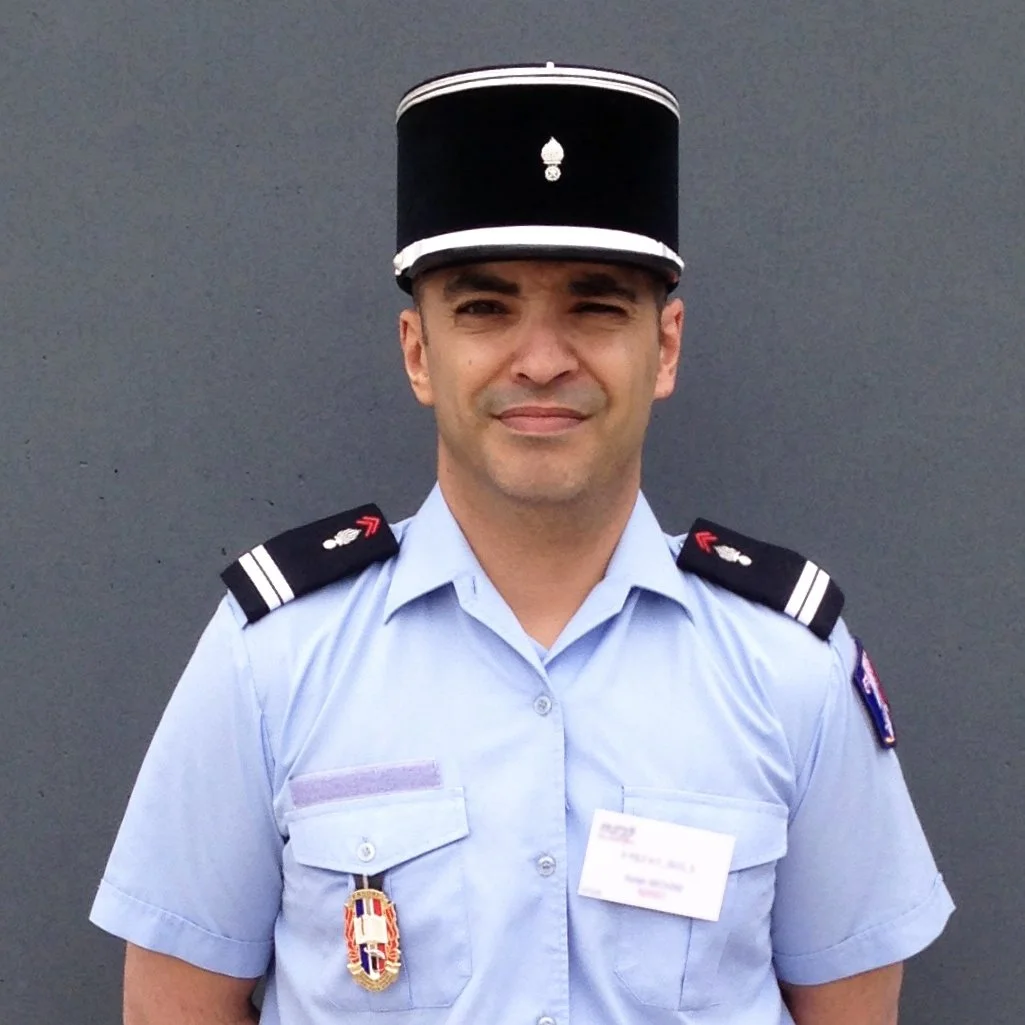
Ridah, Lieutenant Officer in the Fire Brigade.

Right auricular prosthesis, clipped onto a gold bar

I was born in 1976 and my right ear was much smaller than my left ear, which had developed normally. At the age of 7, an attempt was made to reconstruct the pinna by surgery, but my body rejected it. So we abandoned this idea.

I started working in 1996 without encountering any particular problems. As I wear my hair very short, I looked around for an alternative solution, especially for the aesthetic aspect. It was only in 2000 that I heard about prostheses. Dr Saury put the implants in. At that time, I was far from expecting that my prosthesis would change my life in the long term as much as it did. The first thing I did when I received my prosthesis was to buy sunglasses. I couldn’t wear them before because they wouldn’t stay in place on a single ear. It may seem trivial, but for me it was an unforgettable moment.

With my current professional responsibilities, I have to participate in external meetings and seminars. My prosthesis has given me confidence when I speak in public and at meetings with my colleagues. Today, I’m married and I’ve got two children aged 13 and 9 and I am happy in my personal and professional life.

Thanks to Anne-Marie Riedinger and my prosthesis, I can now realise my full potential in my exhilarating job as a firefighter. Wearing a helmet, hat or cap is no longer a problem for me and you can’t tell the difference between my natural ear and the prosthesis. And during interventions, the people we rescue, especially children, are longer surprised or ask questions.

I tried the system with magnet attachments, but I feel more secure when the prosthesis is clipped onto the gold bar, especially for my interventions as a firefighter. I feel that there should be more awareness-raising on the options provided by prosthetic reconstruction using implants.


Zuzanna


Right auricular prosthesis, attached using magnets

“When I was little, I had very short hair and my little ear was completely visible. My auricular deformity has never been a problem for my family. It was when I went to primary school that I started hiding it because my friends would ask questions. I did not want to be treated differently from any of the other children, especially at school, because in addition to everything else, I can’t hear on the right-hand side.

When I was 12, I met a surgeon who explained the two methods of reconstruction. I was afraid that the ear reconstructed via surgery would not be good enough - especially as it would be a permanent solution. After 6 years of thinking about it, I opted for a prosthesis with implants, which can be improved each time it is renewed.  

When I received my first prosthesis, I felt good. Even if I was still focused on my ear, I immediately tied up my hair, which I had never done before! When I showed it to my parents, my dad who works in the artistic field, gave it his thumbs up! As for my mum, she was happy to see me growing in confidence again. Since I’ve had my prosthesis, I’ve taken better care of myself: I wear dresses, I do different hairstyles, I go out more, I am more sociable than before and I just feel so much better. I even do sport, because I can see that there is a reason for that now. I am still a bit afraid that people will realize that I am wearing a prosthesis and ask me questions which I am not yet ready for, but I am trying to make that into less of an issue!”


Right atrial epithesis, retention on gold bar and jumpers

“I was born with a malformation and deafness in my left ear. From the age of 7, I had numerous operations to reconstruct the pinna with grafts of rib cartilage and skin. In the end, the melting and then rejection of the cartilage left me with a lot of pain and scarring.

Then everything had to be redone but an alternative was offered to me by Professor Conraux: reconstruction by epithesis on bone fixtures, a solution that I chose at the age of 12 in 1993.

After the implant placement operations by Dr Kennels and Dr Hémar at Strasbourg University Hospital, I had my first epithesis in 1994. It was fixed by riders on a gold bar. I have always volunteered for all the innovations that Madame Riedinger wanted to test, including making a silicone epithesis sculpted directly on me. It was for presentation at a congress but ultimately too restrictive.

Over the years, I have switched to more and more flexible silicones and to fixation by magnets which have improved the comfort, the quality of the silicones and the support.

Today I am 40 years old, I work and I lead a normal life. I go to the pool, I ride my motorbike, I go rock climbing, I have played basketball, rugby, I have never restricted myself to any sporting or everyday activity. The very soft epithesis does not come off when wearing a helmet, nor if my nephews heckle with me. It's more natural and the very soft feel is more pleasant and it crashes and follows every movement even when I'm lying on it. The feeling is having the same functionality as the natural ear which I really appreciate.

There are a lot of people around me who don't know that I wear an epithesis, because it doesn't get noticed, so I don't talk about it. But I always volunteer to talk to people who have a pinna problem about myself, so sometimes the surgeon calls me and I come and show my epithesis. "


Mary and her prosthesis in 2021


Left atrial epithesis, retention via magnets

“I was born with a small ear in 2004.

My childhood was complicated, I was very shy, I didn't trust myself and I always wore my hair down for fear that someone would notice something.

Only my friends knew about it and everything was going well with them.

But once in college, the first time I tied my hair, some students said it looked like a fin, a thought that pained me so that at that time I never had it tied-up again in public because it's a little disturbing, other people's comments, as soon as a person has something different, it can hurt and it hurts.

All the possible steps had been taken by my parents, we have seen surgeons who have advised against opening the ear canal, because on the one hand, it entailed too many risks and on the other hand, because I hear very fine with my right ear and even a little muted on the left.

For the reconstruction of the pavilion, all solutions have been evaluated. I had already met Madame Riedinger when I was little. When I was 14, I finally opted for prosthetic-reconstruction. I told myself that I could finally tie my hair up and thought that the prosthesis would have a safer cosmetic result than the surgery which scared me a little.

The two small bone fixtures were put in place by Dr Hémar at Strasbourg University Hospital and in October 2018, I had my first prosthesis fixed by magnets.

When everyone around you has two ears, you feel different. With a prosthesis, we become more normal and we feel better.

Thanks to the anaplastologist, I have completely regained my confidence, I tie my hair, and I feel normal. Others don't notice that I have a prosthesis, so that reassures me.

So I lead the same teenage life as everyone else, I have a lot of friends and also a boyfriend who asked me a lot of questions at the beginning, but totally accepts my difference. I wear glasses, and I can put on the mask. I listen to music a lot on my headphones and my dad encourages me not to put it too loud so that I don't lose my hearing. "


Anne-Laure


Right atrial epithesis, retention via gold bar and jumpers

“I was born with a small ear and mild facial paralysis which has faded over the years. The doctors weren't very optimistic, but thanks to the constant stimulation from my parents, I made a lot of progress. I had epileptic seizures in my early childhood that ended when I was 5 years old. Today I am 32 years old.

At school, I didn't have any friends, I was very shy and the kids said I had a broken ear, and I was often punished for no reason. They put me in a specialized class.

When I was 10 my ENT doctor, Dr. Siegel told us about epitheses. I met Prof. Stierlé who explained the two reconstruction methods to me. I chose the epithesis. Doctor Hémar operated on me and I had my first epithesis for Christmas! What a wonderful gift! I was able to relive it, it gave me confidence, I felt like everyone else, I could wear the glasses without elastic and put on earrings. I went to the pool with the epithesis, with a swimming cap the first few years and then with nothing, I was careful jumping in the water.

Also, I have been playing tennis since I was 5, I hid my little ear with my shoulder length hair, but as soon as I got my epithesis I was able to feel like everyone else. I started competing at the age of 13, was ranked 15/3 in 2010. Tennis is still my passion today. I was also vice-champion of pétanque du Bas-Rhin in 2004, and did gymnastics.

Thanks to my epithesis, other people's gaze is now normal, I have become more independent, I got my driver's license and I work. The epithesis has become part of my identity, I only take it off to sleep and take a shower. ”